Could smart urban design keep people fit and trim?

Science News Magazine

Weighing In on City Planning

On January 20, 2007, Science News published an article[i] about the relationship between city design and health. New cross-disciplinary research is exploring whether urban sprawl makes us soft, or whether people who don't like to exercise move to the sprawling suburbs, or some combination of both. 

Here are several excerpts from the article:   "So far, the dozen strong studies that have probed the relationships among the urban environment, people's activity, and obesity have all agreed, says Ewing. 'Sprawling places have heavier people... There is evidence of an association between the built environment and obesity.'   As scientists investigate the relationship between sprawl and obesity, a compact style of city development sometimes called smart growth might become a tool in the fight for the nation's health.

However, University of Toronto economist Matthew Turner charges that 'a lot of people out there don't like urban sprawl, and those people are trying to hijack the obesity epidemic to further the smart-growth agenda [and] change how cities look.' ... 'We're the only ones that have tried to distinguish between causation and sorting... and we find that it's sorting,' [says Turner]. 'The available facts do not support the conclusion that sprawling neighborhoods cause weight gain.'"


[i] Harder, Ben, Weighing In on City Planning:  Could smart urban design keep people fit and trim?  SCIENCE NEWS, Week of Jan. 20, 2007; Vol. 171, No. 3 
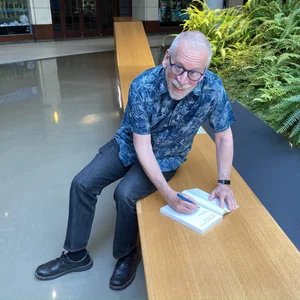
H. Pike Oliver, FAICP

H. Pike Oliver focuses on master-planned communities. He is co-author of Transforming the Irvine Ranch: Joan Irvine, William Pereira, Ray Watson, and THE BIG PLAN, published by Routledge in 2022.

Early in his career, Pike worked for public agencies, including the California Governor's Office of Planning and Research, where he was a principal contributor to An Urban Strategy for California. For the next three decades, he was involved in master-planned development on the Irvine Ranch in Southern California, as well as other properties in western North America and abroad.

Beginning in 2009, Pike taught real estate development at Cornell University and directed the undergraduate program in Urban and Regional Studies. He relocated to Seattle in 2013 and, from 2016 to 2020, served as a lecturer in the Runstad Department of Real Estate at the University of Washington, where he also served as its chair.

Pike graduated from San Francisco State University's urban studies and planning program and received a master's degree in urban planning from UCLA. He is a member of the American Planning Association, the College of Fellows of the American Institute of Certified Planners, the Urban Land Institute, and a founder and emeritus member of the California Planning Roundtable.

https://urbanexus.com/about-h-pike-oliver
Previous
Previous

Levittown is going to be 60

Next
Next

Urban sprawl not as harmful to wildlife as previously thought?