The American Real Estate Society (ARES) distributes this periodic newsletter, which features real estate-related news and information curated by H. Pike Oliver.
Hospitality
San Francisco hotels sell for 75% off
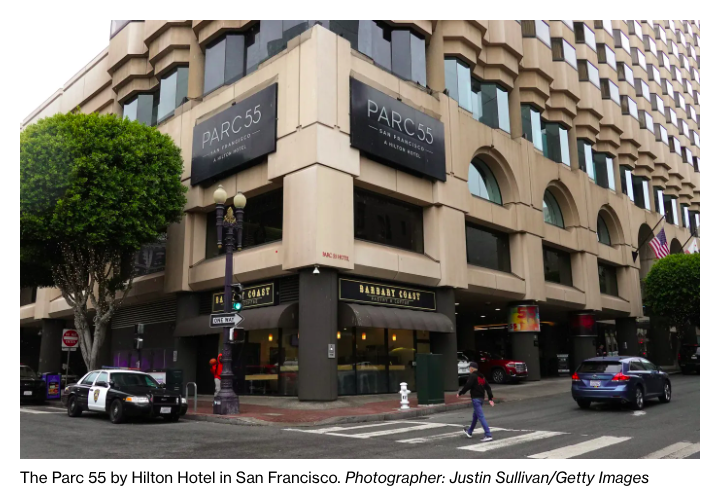
A pair of San Francisco hotels whose travails exemplified a fallen commercial real estate market are changing hands, marking a milestone in the city’s comeback story as it attracts some of the world’s largest investors.
Newbond Holdings and Conversant Capital are partnering to acquire the Hilton San Francisco Union Square and Parc 55 San Francisco for $408 million, according to a statement Friday. The price represents a roughly 75% discount to the hotels’ appraised value in a 2016 financing.
The transaction — which follows recent hotel purchases by Blackstone Inc. and Sixth Street — involves roughly 3,000 rooms between the two properties, or more than 8% of the city’s hotel inventory.
Learn more here.
Annual RevPAR for U.S. hotels declines
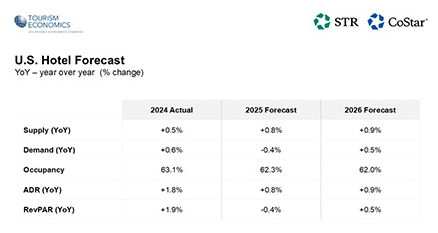
Revenue per available room (RevPAR) was revised downward in the final performance projections for the U.S. hospitality sector in 2025, according to the latest forecast from CoStar Group and Tourism Economics, an Oxford Economics company. RevPAR is projected to finish the year at a decline of 0.4 percent (or negative 40 basis points) compared to a year ago. This would result in the first total-year decline since 2020 and only the second since 2009, both of which were years with major macroeconomic disruptions with the COVID-19 pandemic and Great Financial Crisis, respectively.
CoStar and Tourism Economics also lowered occupancy projections to end the year at 62.3 percent, a decline from 63.1 percent at year-end 2024, while average daily rate (ADR) was held steady at +0.8 percent for the year. For 2026, occupancy is projected to decline by another 30 basis points, while ADR and RevPAR are projected to trend positive by 90 and 50 basis points, respectively (see chart).
Make it stand out
Whatever it is, the way you tell your story online can make all the difference.
Learn more here.
Residential
The problem with housing in the USA in one chart
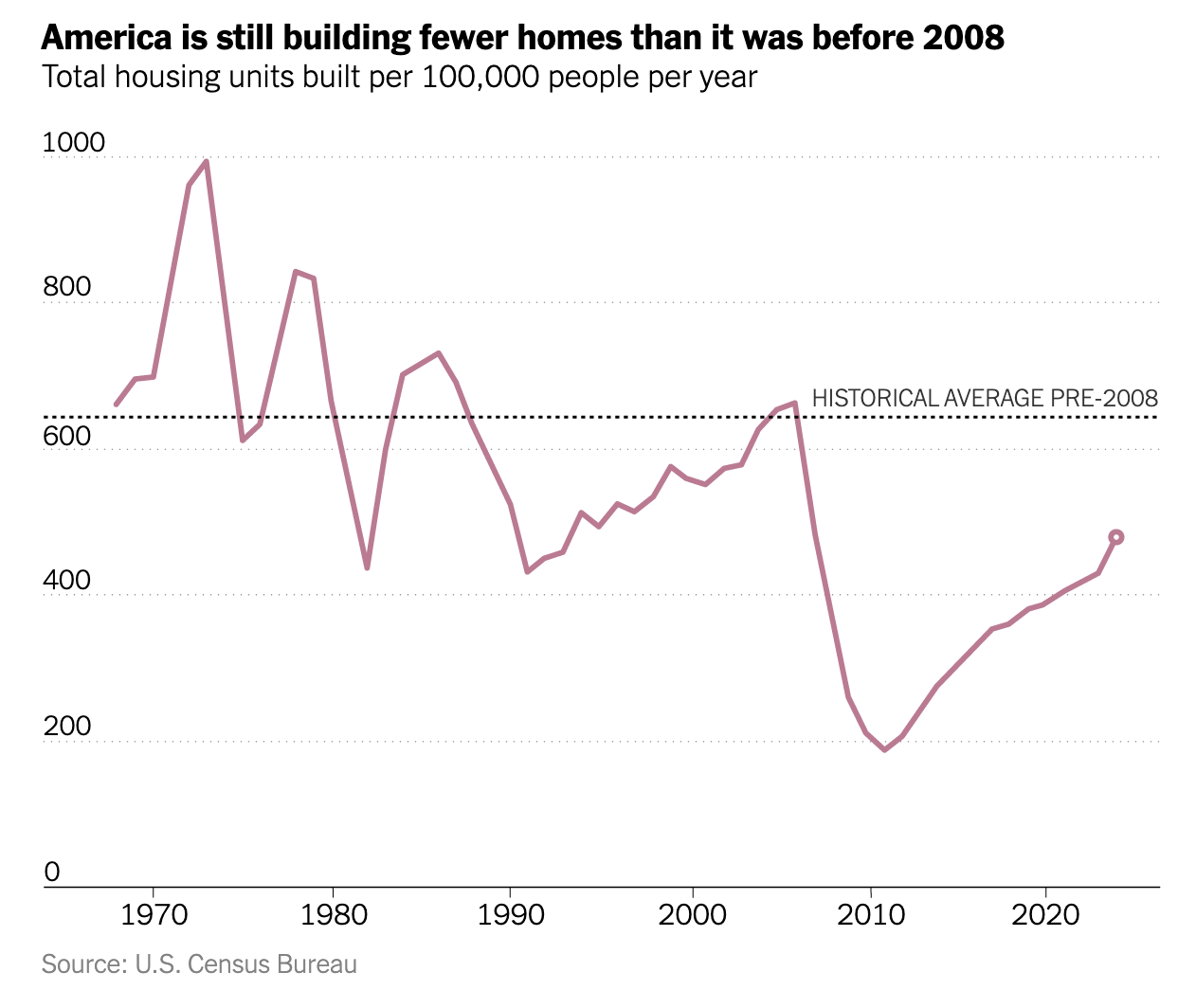
Ezra Klein of the New York Times notes that too much money is chasing too few homes. How many more homes does America need? It’s a shortage decades in the making — and one we’re nowhere near on track to solving. In 2025, America built fewer homes per 100,000 people than it did in 2005, 1995, 1985 or 1975.
If you wanted to encapsulate the entire problem in a single chart, here it is:
Learn more here.
America’s residential mortgage market is shrinking
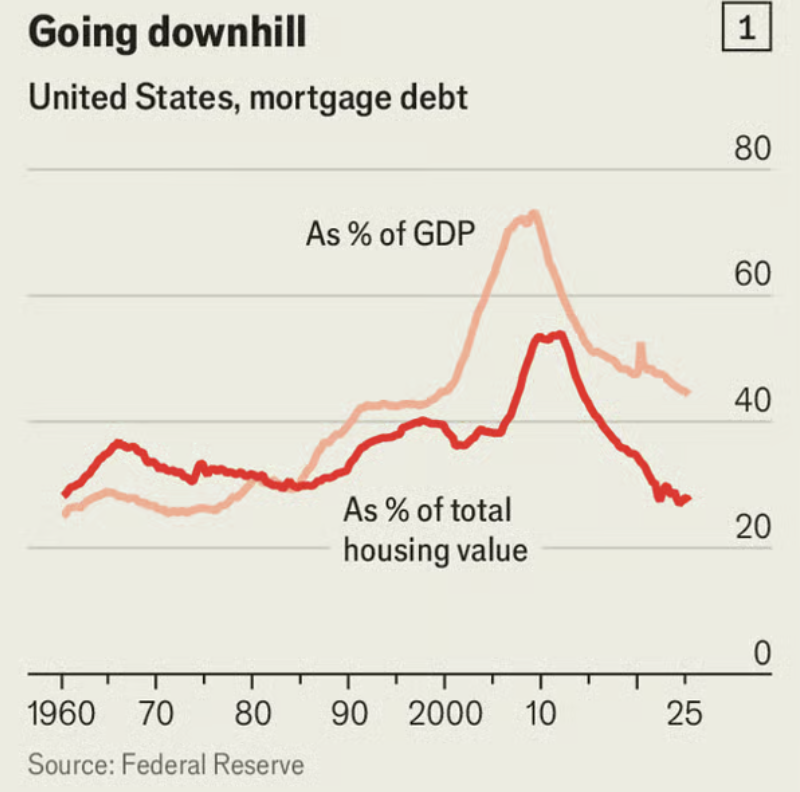
As reported by The Economist¹, America’s mortgage market is undergoing what some call a “great demortgaging.” The total stock of mortgage debt now stands at $13.5 trillion, equal to 44% of GDP, its lowest share since 1999. Even more striking, mortgage debt has fallen to just 27% of household property value, a 65‑year low. This contraction signals deep challenges for housing markets.
The cost of borrowing has risen sharply. Median monthly mortgage payments have doubled in just five years, climbing from a little over $1,000 to $2,100. At the same time, access to mortgages has shrunk to its lowest level in decades. Rising interest rates, homeowners reluctant to give up pandemic‑era cheap loans, and stricter lending standards have all contributed to this squeeze.
Lending standards tightened dramatically after the 2007–09 financial crisis. Before the crash, 35–45% of mortgages went to borrowers with credit scores below 720. Today, that share has dropped to just 22%. Government‑backed entities like Fannie Mae and Freddie Mac, along with the Dodd‑Frank Act, restricted riskier lending and made mortgages harder to obtain. As a result, many households have been frozen out of ownership, slowing turnover in the housing market.
This mortgage drought has also discouraged new construction. Developers are less willing to build when buyers cannot secure financing. While multi‑family housing rebounded after the crisis, single‑family homebuilding still lags far behind pre‑2007 levels. Fast-growing metropolitan areas such as Atlanta, Phoenix, Austin, and Orlando face shortages, driving rents higher.
Politicians have taken notice. President Trump has blamed the Federal Reserve for being slow to cut rates and has floated ideas such as allowing cryptocurrency as collateral, eliminating capital‑gains tax on home sales, and introducing 50‑year mortgages. Analysts, however, see these proposals as unlikely to succeed given regulatory barriers and political divisions.
Meanwhile, the market itself is adapting. Investors have shifted toward single‑family rentals, providing supply but raising concerns about institutional landlords inflating prices. States such as New York and Oregon are moving to restrict large investors from buying homes, reflecting growing political backlash.
Looking ahead, the U.S. faces a combustible mix of affordability pressures, political battles, and investor scrutiny. Without easing supply constraints, expanding mortgage access could simply push house prices higher, leaving the core problem unresolved and making housing affordability an even sharper flashpoint in American politics.
¹ The Economist. “America’s Huge Mortgage Market Is Slowly Dying.” November 19, 2025.
The 50-year mortgage
Per Peter Coy, educated people are confidently stating things about mortgages that are simply wrong. It’s particularly obvious, and annoying, in the recent discussions of President Trump’s advocacy of a 50-year mortgage. He is frustrated with the critics who dwell on the fact that the interest paid over the life of a 50-year mortgage would be higher than the interest paid over the life of a 30-year mortgage. (Here are a few articles harping on that point.)
It’s both true and irrelevant. It ignores the time value of money. A dollar you manage to save today is worth more than a dollar you manage to save 20 or 30 or 50 years from now. If you can save a dollar on your mortgage payment today by getting a longer-term mortgage and you invest it safely at 4.7 percent (which is what 30-year Treasuries are yielding now), after 50 years your one dollar will turn into nearly $10, ignoring taxes.
You could use some of that $10 to pay some of that interest. True, by year 50 the monthly payment is almost entirely principal, not interest, but you get the point: All dollars are not created equal. Future ones are worth less than current ones. So don’t be afraid if the interest payments on your house are going to exceed the house’s current value; a lot of that interest will be paid far in the future, when it won’t seem like so much anymore.
What we should be using is a mortgage calculator that compares mortgage loans in terms of their present value — that is, converts their entire future payment streams into today’s dollars. Coy also notes that by making your monthly payment smaller, it reduces the risk that you won’t be able to pay it and will lose your home.
Learn more here.
The over-65 crowd and college campuses
According to a report from the higher education publication Best Colleges, at least 84 public or nonprofit colleges have ananounced they would merge or close over the past five years. Almost half of those are outright closures, as small colleges struggle to keep up with rising costs amid falling enrollment. In many instances, the shuttering of a college means the mothballing of its campus.
But while some campuses are being left idle with no future plans, a growing number are finding new life in the form of senior living facilities. That doesn’t mean just moving seniors into old dorm buildings. Some adaptation projects are showing that college campuses have room and opportunity for building reuse and building redesign to accommodate the special needs of senior residents.
A recent example is the Newbury of Brookline, a luxury senior living community in Massachusetts built from and around the former buildings of Newbury College, which shuttered in 2019. Located just outside Boston, the campus centered around a historic mansion and had been used by the college since the early 1980s.
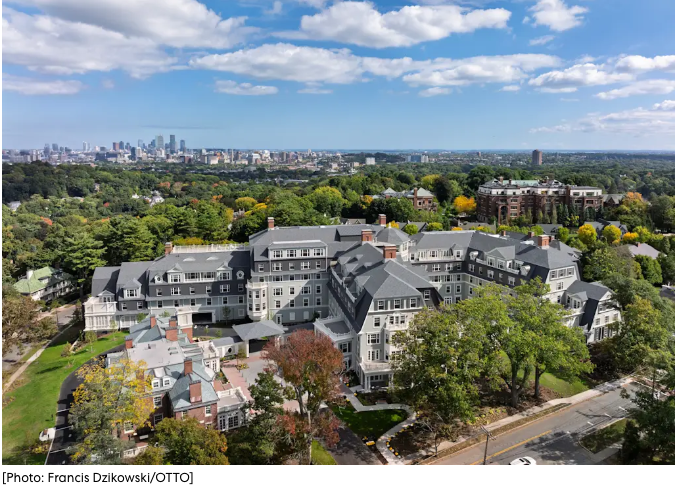
This project is part of a trend in higher education, particularly at smaller colleges, which are turning to real estate development as a way to bolster their bottom line, or, in the case of closed colleges, finding entirely new life. In dozens of projects across the country, colleges are turning over parts of their campuses for redevelopment as housing, and often senior housing.
Learn more here.
The demise of the SRO in the USA
In The Banished Bottom of the Housing Market <sup>1<sup> Ryan Puzycki traces the rise and deliberate destruction of single-room occupancy (SRO) housing in the United States, once the cheapest and most flexible form of urban shelter. From the late 19th century through the mid-20th century, SROs—including YMCA residences and residential hotels—provided millions of low-income individuals with affordable, independent housing.
Reformers, however, stigmatized SROs as morally and socially corrosive, using building codes, zoning laws, and urban renewal to eliminate them. By the 1970s and 1980s, the near-total disappearance of SROs coincided with deinstitutionalization and federal housing cuts, fueling the modern homelessness crisis.
Puzycki argues that this loss was not accidental but the result of policy choices that privileged single-family homes and office development over affordable communal housing. Today, with nearly 800,000 unhoused people and millions of extremely low-income renters, he highlights the potential of converting surplus office space into co-living units as a modern analogue to SROs. Re-legalizing and subsidizing such housing, the article concludes, is essential to restoring the “banished bottom” of the housing market and addressing America’s affordable housing shortage.
Puzycki, Ryan. “The Banished Bottom of the Housing Market: How America Destroyed Its Cheapest Homes.” City of Yes (Substack), November 14, 2024. https://www.ryanpuzycki.com/p/the-banished-bottom-of-the-housing..
Rent setting algorithm settlement
Nine states have reached a $7 million settlement with Greystar, resolving claims that the Charleston, South Carolina-based apartment giant participated in a scheme that drove up rental prices by using shared rent-setting algorithms, according to a federal court filing in the Middle District of North Carolina[1].
If the federal district court approves the consent decree, Greystar will pay $7 million to the participating states and agree to strict new limits on its use of rent-setting algorithms and data-sharing platforms. It must identify an antitrust compliance officer to the states within 30 days of the entry of the consent judgment.
Under the terms of the settlement, Greystar would be prohibited from:
Licensing or using any revenue management product that uses external non-public data (other than non-public data of the property owner of the subject Greystar property) to generate rental prices or rental pricing recommendations.
Licensing or using any commercially available revenue management system that incorporates a rental price floor or a limit on rental price recommendation decreases, though there are specific exclusions.
Disclosing non-public data to any other property manager or property owner as part of setting rental prices or generating rental pricing recommendations.
Leslie Shaver. “9 States Reach $7M Settlement with Greystar.” Multifamily Dive, November 20, 2025.
Regional and metropolitan trends
Growth challenges in greater Phoenix
Phoenix’s explosive population growth is testing infrastructure capacity and pushing housing affordability to critical levels, creating mounting challenges for builders. The metro’s Millennial population grew 8.9% from 2020 to 2024, while Baby Boomers increased 10.8%.
According to Zonda Economics, Phoenix faces what developers describe as a “deadlock.” Utilities, water, and transportation systems must be in place before permits can be issued. Municipalities cannot fund or build them quickly enough due to long procurement, bonding, and planning cycles.
Learn more here.
Downtown Detroit’s resurgence
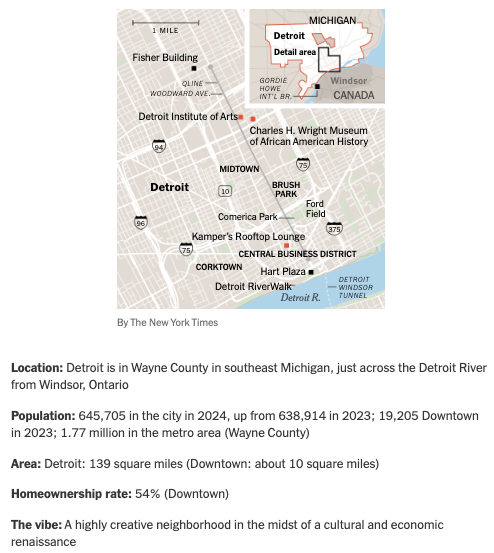
Detroit’s downtown revival offers a compelling case study in urban reinvestment and demographic turnaround. Once synonymous with decline—marked by a 33 percent population loss between 2000 and 2020 and a landmark municipal bankruptcy in 2013—the city has now posted two consecutive years of population growth, outpacing both Michigan cities and the national average in 2024. Anchored by major employers such as Rocket Mortgage, General Motors, and Ford’s innovation hub, this growth has translated into heightened demand for housing across diverse demographic segments, including young professionals, families, empty nesters, and returning suburbanites.
Central to this transformation is Bedrock, Dan Gilbert’s development firm, which has invested $7 billion since 2011 to reposition downtown as a mixed-use hub. Projects such as City Modern, Hudson’s Detroit, and the adaptive reuse of historic Victorian, Art Deco, and Neoclassical structures demonstrate how heritage architecture can be leveraged to meet contemporary residential and commercial needs.
Beyond housing, the city’s renaissance is reinforced by cultural institutions, a growing food and nightlife scene, and enhanced mobility through the QLine streetcar, People Mover rail, and bike-share programs. Neighborhoods such as Midtown, Corktown, Brush Park, and the Central Business District each contribute distinct identities, from university-centered vibrancy to restored Victorian enclaves.
For real estate academics and industry researchers, Detroit exemplifies the interplay of large-scale investment, demographic shifts, and cultural capital in reshaping urban cores. Its trajectory underscores the potential of well-coordinated public-private initiatives to reverse decline and foster sustainable urban growth.
Learn more at: “Downtown Detroit Is Back,” New York Times, July 30, 2025.
Make it stand out
Whatever it is, the way you tell your story online can make all the difference.
STEM job growth index (STEMdex)
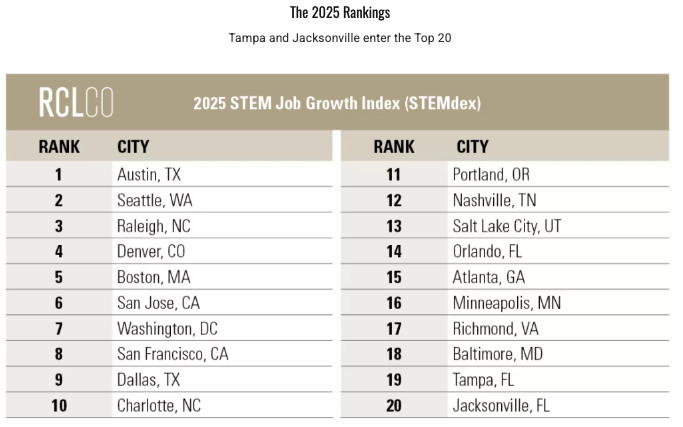
Every year since 2016, RCLCO has published the STEMdex, an annual analytical ranking of U.S. metropolitan areas that evaluates their potential for future growth in Science, Technology, Engineering, and Mathematics (STEM) industries. These rankings identify markets with the strongest prospects for STEM employment and industry expansion, providing valuable insights for stakeholders across sectors.
STEM industries are vital drivers of innovation and economic growth. These jobs are among the highest-paying and most impactful, attracting a diverse, highly educated workforce. From 2019 to 2024, employment in STEM roles grew by 1.9%, outpacing the 0.9% growth in non-STEM jobs. Salaries in STEM fields averaged $112,800 annually, nearly double the $64,430 average for non-STEM roles [1]
The tech industry has undergone major structural shifts over the past year. The rapid rise of generative AI, the expansion of green technologies, and advances in manufacturing are reshaping regional economies across the country by driving changes in staffing, capital investment, and efficiencies. AI applications are now permeating nearly every sector, from data science to healthcare, creating new efficiencies and business models. At the same time, growth in renewable energy, battery storage, and carbon capture is fueling job creation in states such as Texas, Oklahoma, Colorado, and Georgia. Federal policies including the CHIPS and Science Act and the Inflation Reduction Act have further accelerated this transformation, prompting multibillion-dollar investments in domestic semiconductor and clean-tech manufacturing.
Addressing the markets that are most likely to see significant STEM growth in the coming years is important as it informs policy makers, office investors, and potential jobseekers. The concentration of these jobs has many implications on infrastructure needs, the housing market, and supply chain design.
The 2025 STEMdex serves as an update to last year’s endeavor and forecasts the concentration of STEM jobs over the next five to ten years.
Learn more from:.Ryan Guerdan and Gregg Logan, 2025 STEM Job Growth Index (STEMdex), RCLCO Real Estate Consulting, November 13, 2025, https://www.rclco.com/publication/2025-stem-job-growth-index-stemdex/.
Make it stand out
Whatever it is, the way you tell your story online can make all the difference.
Global business districts regaining strength
The 2025 EY–Urban Land Institute (ULI) Global Business Districts Attractiveness Report shows that major business districts have regained their global appeal, with 63 percent of stakeholders viewing them as more attractive than before the pandemic.¹ The top 30 districts collectively generate USD 4.5 trillion in GDP, employ more than seven million people, host 84 Fortune Global 500 companies, and house 296 headquarters. Leading the rankings are Midtown Manhattan (#1), New York’s Financial District (#2), Tokyo Marunouchi (#3), Paris La Défense (#4), and London’s City (#5).
Regional Trends
Asian districts continue to rise, with Beijing, Singapore, and Seoul among the top 10, reflecting the region’s growing economic influence. In North America, New York remains strong, while Los Angeles and San Francisco struggle with vacancy and safety issues, with vacancy rates nearly three times higher than in Asia. Europe shows declining competitiveness, hosting fewer Fortune 500 headquarters and attracting lower investment volumes compared to Asia, though it leads in sustainability efforts, particularly in Frankfurt and Amsterdam. Meanwhile, new districts are emerging in the Middle East (Dubai’s DIFC, Riyadh’s KAFD), India (Bangalore’s Outer Ring Road, Mumbai’s BKC), and other regions such as Johannesburg, São Paulo, and Casablanca.
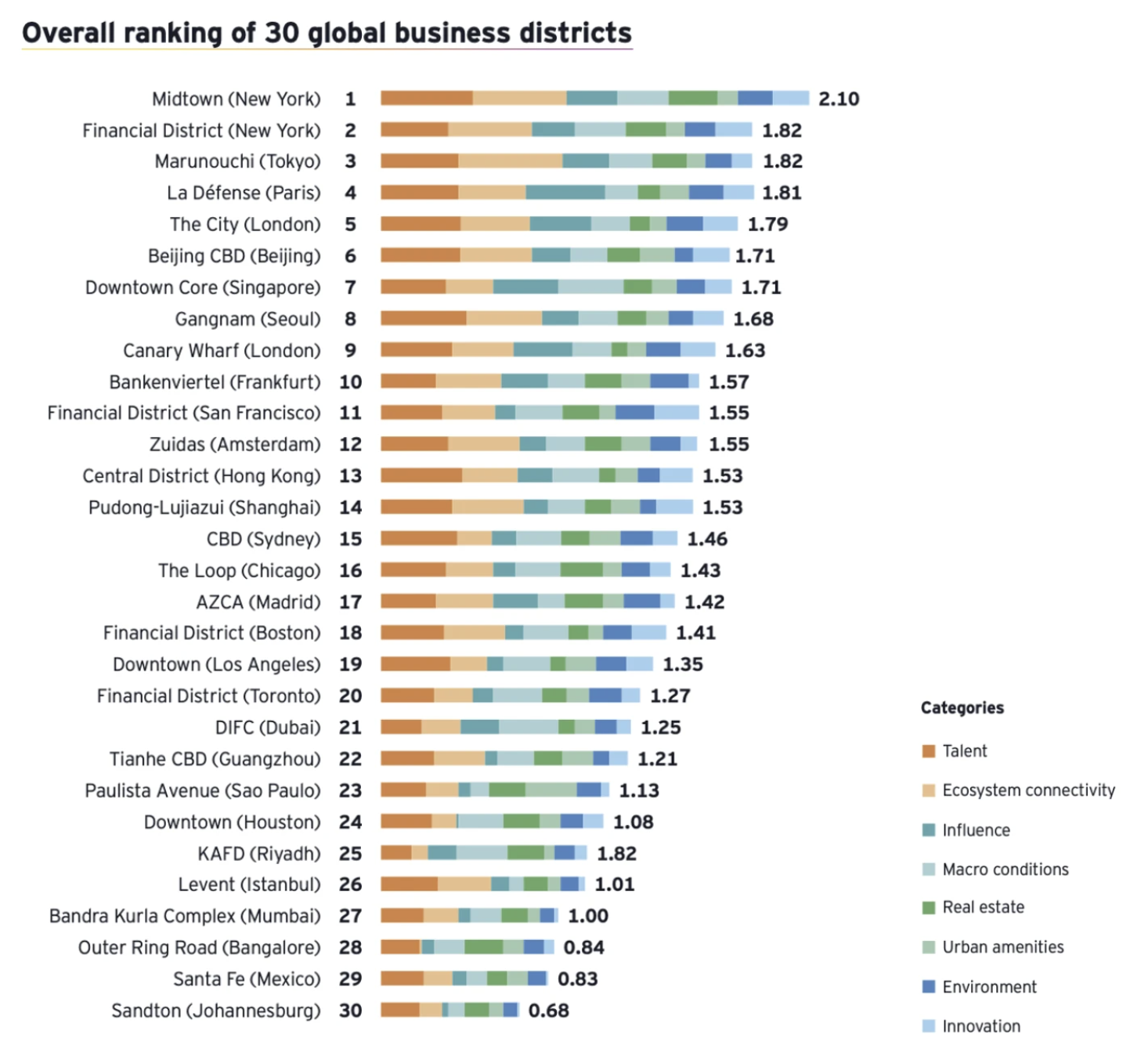
Source: Urban Land Institute/Ernst & Young
Megatrends shaping the future
The report identifies four megatrends that will shape the evolution of global business districts. First, talent attraction has become the overriding priority, with 76 percent of executives ranking it as their top concern. Districts must now act as partners to companies, investing in transport, technology, placemaking, safety, and affordable housing. Mixed-use environments such as São Paulo’s Paulista Avenue and Paris La Défense illustrate how districts that combine residential, cultural, and leisure amenities with workplaces are increasingly favored.
Second, the question of real estate value is central. While iconic architecture and prestigious addresses remain attractive, companies are increasingly focused on quality, accessibility, and sustainability. Premium rents continue to rise in leading districts like London and Midtown Manhattan, showing that businesses are willing to pay more for modern, service-rich, and environmentally efficient spaces. Conversely, districts that fail to adapt or allow obsolescence to take hold are losing ground.
Third, technology plays a dual role as both a disruptor and an enabler. Artificial intelligence, IoT, and digital twins are reshaping operations, improving efficiency, and positioning districts as centers of innovation. Yet, despite these advances, only 12 percent of unicorn startups are headquartered in global business districts, highlighting a “unicorn gap” that risks ceding ground to more agile innovation clusters. Examples of technology integration include Singapore’s Marina Bay with IoT and 5G, Paris La Défense’s AI-driven congestion management, and Beijing CBD’s AI-enabled traffic and security systems.
Finally, sustainability has become a defining challenge. Districts are prioritizing low-carbon mobility, building retrofits, and green/blue infrastructure, but fewer than 10 percent of executives believe current efforts are sufficient to address climate risks. European districts lead in this area, with Frankfurt’s Bankenviertel topping the sustainability rankings, followed by San Francisco’s Financial District and London’s City. The report stresses that integrating climate considerations into planning, investment, and governance will be critical for long-term success.
Recommendations
The report concludes that business districts are evolving into “Central Social Districts” (CSDs), inclusive, mixed-use hubs that blend work, living, culture, and climate resilience. Key recommendations include putting people first by focusing on talent and housing affordability, reinventing real estate through adaptive reuse and sustainable design, harnessing technology for resilient operations, fostering collaboration between corporations, academia, and startups, and committing to low-carbon growth through retrofit-first strategies and clean mobility.
¹ Nokling, Tony. 2025. “EY/ULI Report on Attractiveness of Global Business Districts Shows Leading Hubs Are Regaining Strength While Facing New Challenges.” Urban Land Magazine, November 21.
Mixed-used
Keys to successful mixed-use development
According to Mark Toro, mixed-use developments succeed not because of their buildings but because of the “software”—the experiences, hospitality, and community-building details that transform them into true gathering places.¹ While many projects get the hardware right (design, tenants, architecture), few master the subtler elements that keep people coming back again and again.
Examples of success include The Wharf (Washington, D.C.), Legacy West (Plano, TX), Domain Northside (Austin), and Americana at Brand (Glendale, CA). Toro’s team applied lessons from these places to Avalon (Alpharetta, GA), Colony Square (Atlanta), and now Medley (Johns Creek, GA). Avalon, opened in 2014, has become a suburban destination drawing 7.5 million annual visitors and commanding rent premiums across all property types. More importantly, it has become a place of cherished memories, with over 100 marriage proposals taking place there.
The challenge for cities: Many suburbs lack a “there there” and are now incentivizing developers to create town centers. But without the right software—hospitality, marketing, staffing, and programming—these centers risk becoming lifeless, visited once but not returned to.
Eight key learnings (“software” principles):
Shared mindset – All stakeholders must align on values like community, wellness, and walkability.
Experience fee – Nonretail uses contribute to a fund for events, marketing, and hospitality.
Seamless connectivity – Unified technology solutions provide frictionless internet and digital services.
Plaza as the heart – A central green space activated with 200+ events annually, designed for lingering and social energy.
One brand, one community – Cohesive branding across signage, online platforms, and tenant communications.
Controlling the story – Proactive public relations ensures consistent messaging across partners and media.
Hospitality-level service – Concierge and staff trained with Ritz-Carlton principles deliver resort-style service.
Operational precision – Rigorous daily maintenance fosters comfort, trust, and pride of place.
The bottom line: Hardware attracts initial attention, but software creates lasting success. Every detail matters. Developers must act as community curators, shaping experiences that make mixed-use projects true “third places” where people live life together.
¹ Mark Toro. “The Secret to Mixed-Use Success? It’s Not the Buildings.” Urban Land Magazine, August 8, 2025.
Around the world
High rises are changing Bratislava
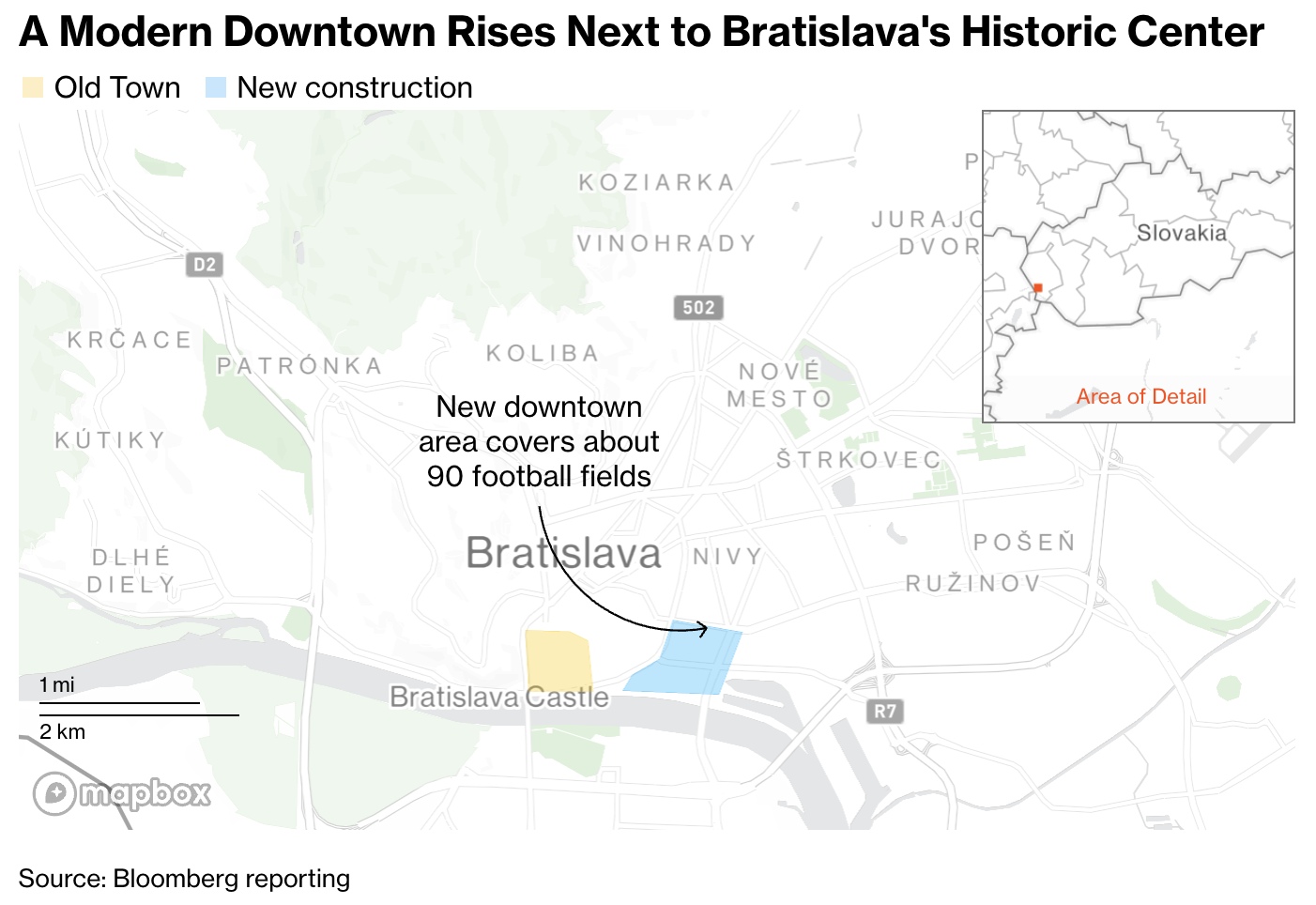
The new concentration of high-rise buildings close to the historic center of the capital of Slovakia is unique in Central Europe. New luxury residences, premium office towers, and flagship shopping galleries stand in sharp contrast to socialist-era architecture — grey, utilitarian, and appreciated mainly by architecture buffs — that defined the city's spirit for so long. Development has opened right up to the Danube, with a waterfront promenade lined with parks, cafes, restaurants, and playgrounds.
Learn more here.