The Moynihan Report and single-family housing in the USA
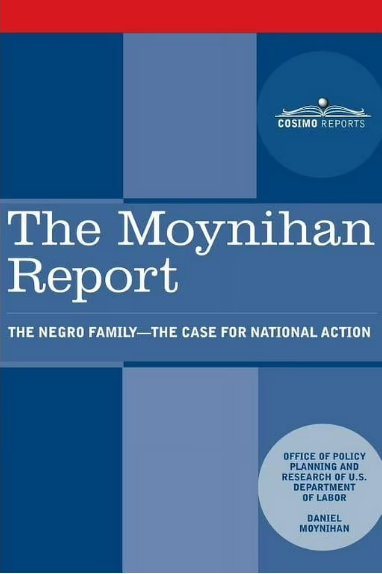
Published by the U.S. Department of Labor in March 1965 ¹
Six decades after the U.S. Department of Labor published Daniel Patrick Moynihan’s report, The Negro Family: The Case for National Action (1965)¹, its influence continues to reverberate across housing and community development policy and finance in the USA. The report framed the nuclear family as the normative unit of social stability, portraying female‑headed households as less than ideal and ignoring the resilience of extended kinship structures. While Moynihan did not create the nuclear family bias in U.S. housing policy, his report of six decades ago reinforced it.
Reading Henry‑Louis Taylor’s recent critique of the Moynihan report² prompted me to reflect on its broader impact. The report has been criticized for linking Black poverty to cultural rather than structural causes. Lesser known is how the Moynihan Report reinforced a housing system blind to extended kinship traditions across racial and immigrant communities.
Kinship networks were ignored
Moynihan’s report¹ portrayed female‑headed households as central to a “tangle of pathology,” describing Black families as “crumbling” and linking them to poverty, delinquency, and social instability. Nuclear family breakdown was presented as the primary barrier to Black progress, while extended kinship networks were ignored.
Later, anthropologists such as Carol Stack (All Our Kin)³ documented how extended kinship networks provided resilience, mutual aid, and childcare in poor communities. Her study debunked the misconception that poor families were unstable and disorganized, and showed that families adapted to their poverty conditions by forming large, resilient, lifelong support networks. These networks were highly structured and surprisingly complex, providing support for childcare, housing, and survival. Chinese, Pakistani, and Indian households also often rely on multigenerational living arrangements⁴, ⁵, ⁶.
Henry‑Louis Taylor Jr.² argues that, beyond shaping perceptions of Black family dysfunction, the report reinforced a narrow, nuclear family ideal, thereby shaping the development of federal policy. By strengthening the nuclear family as the normative unit, Moynihan’s report validated federal housing and community development policies that privileged single‑family homes and sidelined diverse family structures.
Biased housing policy and programs
In the years following the publication of the Moynihan Report, U.S. housing policy failed to embrace extended kinship family structures, reinforcing a narrow nuclear family ideal. This bias was reflected in a variety of federal housing programs.
FHA mortgage insurance
The Federal Housing Administration (FHA) continued to focus on mortgage insurance for single‑family homes designed for occupancy by nuclear families. ⁷, ⁸ This site planning design bias marginalized extended-kinship households and multigenerational living arrangements, embedding exclusionary practices into the nation’s housing finance system.
GI Bill and VA loans
The GI Bill, administered by the Veterans Administration (VA), extended mortgage benefits to millions of veterans, overwhelmingly for suburban single‑family homes⁹, ¹⁰, ¹¹. This accelerated suburbanization and reinforced the nuclear family ideal as the dominant housing model. Apartments and community facilities that might have supported extended households received little attention.
Mortgage interest deduction
The federal mortgage interest deduction disproportionately benefited middle‑class homeowners in single‑family houses¹², ¹³, ¹⁴. No equivalent support was provided for rental housing, cooperative ownership, or multigenerational arrangements. This fiscal bias further entrenched the nuclear family model.
Government‑sponsored enterprises
Two government‑sponsored enterprises (GSEs) have become a primary source of residential mortgage securitization:
Fannie Mae (1938, rechartered as a GSE in 1968): Created to expand mortgage liquidity¹⁵, ¹⁶.
Freddie Mac (1970): Established to provide competition and stability in the secondary mortgage market¹⁵, ¹⁶.
GSE underwriting guidelines were built around mid‑20th‑century assumptions of stable wage income, long employment histories, and single‑family, nuclear‑household structures. Despite procedural changes, the core logic of GSE underwriting remains rooted in the income patterns and housing forms of the postwar nuclear‑family model.
Both institutions overwhelmingly securitized single‑family mortgages, channeling trillions of dollars into suburban homeownership, which was mostly single‑family housing.
Urban planning, zoning, and community development
The bias toward single-family housing extended beyond federal policy and programs to state and local land use policies, planning, and zoning regulations. By the end of the 20th century, the majority of residential land in many U.S. cities was zoned exclusively for single‑family homes¹⁷, ¹⁸, ¹⁹. Federal financing and local zoning worked in tandem to lock in a housing system that excluded extended kinship households and ignored cultural diversity.
Consequences
The cumulative effect of these federal and local policies was the construction of a housing system that privileged a narrow vision of the American household. By centering mortgage insurance, tax benefits, and underwriting standards on single‑family homes designed for nuclear‑family occupancy, federal programs helped normalize a specific cultural ideal while marginalizing the diverse kinship structures that characterized many Black, immigrant, and working‑class communities.
This institutional bias shaped the physical form of American neighborhoods, directing capital toward suburban subdivisions and away from multifamily, mixed‑use, or flexible housing types that could have supported extended‑kinship and multigenerational living arrangements. As a result, the built environment itself became an instrument of cultural standardization, reinforcing the assumption that the nuclear family was the default and desirable household form.
These policies also produced enduring social and economic consequences. Single‑family zoning and mortgage finance practices reinforced racial and economic segregation by restricting access to neighborhoods with the greatest public and private investment. Neighborhood planning and housing design failed to reflect the living patterns of communities whose resilience depended on extended kinship networks.
At the same time, the overwhelming emphasis on single‑family homes constrained the supply of diverse housing types, contributing to the affordability crisis affecting metropolitan regions across the country. The legacy of these choices is a housing system that remains structurally misaligned with the demographic realities of the twenty‑first century, where multigenerational and extended‑family households are once again on the rise.
Contemporary reassessment
Taken together, these consequences reveal how deeply the nuclear‑family ideal became embedded in the nation’s housing and planning systems. For decades, federal mortgage programs, tax incentives, underwriting standards, and local zoning codes worked in concert to privilege single‑family suburban development while marginalizing the diverse kinship structures that characterize many American households. The result is a built environment that reflects mid‑twentieth‑century cultural assumptions far more than the demographic realities of the twenty‑first century. As multigenerational and extended‑family households grow , the limitations of this inherited system have become increasingly visible.
It is within this context that recent zoning reforms and housing policy debates must be understood. Efforts in states and cities to legalize duplexes, triplexes, accessory dwelling units, and other flexible housing types represent not only a response to affordability pressures but also a broader reassessment of the cultural assumptions embedded in earlier policy regimes. These reforms signal a gradual shift away from the rigid single‑family paradigm and toward a more inclusive understanding of household diversity and community design.
Recent housing policy, land use, and zoning reforms in California, Oregon, and Minneapolis challenge this legacy by legalizing duplexes, triplexes, and accessory dwelling units²⁰, ²¹, ²². These efforts recognize the persistence of multigenerational households and extended kinship traditions across racial and ethnic groups.
Conclusion
The Moynihan Report was not a turning point, but it reinforced the evolution of U.S. housing policy. Its nuclear family emphasis validated existing biases in FHA underwriting, GI Bill benefits, tax deductions, and GSE financing.
By failing to acknowledge extended kinship traditions, the report missed an opportunity to broaden federal programs and community development toward greater inclusivity. Today’s housing affordability challenges underscore the importance of correcting this historical blind spot.
Sources
Daniel Patrick Moynihan, The Negro Family: The Case for National Action (Washington, D.C.: U.S. Department of Labor, 1965), https://www.dol.gov/sites/dolgov/files/OASP/legacy/files/moynihan.pdf
Henry‑Louis Taylor Jr., “Reflections on the Moynihan Report and Black Family Dysfunctionality,” University at Buffalo, https://arts-sciences.buffalo.edu/urban-and-regional-planning/faculty/henry-louis-taylor.html
Carol Stack, All Our Kin: Strategies for Survival in a Black Community (New York: Harper & Row, 1974), https://books.google.com/books/about/All_Our_Kin.html?id=Qh9dDwAAQBAJ
USA Today, “Multigenerational Housing Is Gaining Popularity,” May 1, 2023, https://www.usatoday.com/story/news/nation/2023/05/01/multigenerational-housing-popularity/70167882007/
Urban Land Institute, “Making Multigenerational Communities Happen,” https://uli.org/research/multigenerational-communities/
Pew Research Center, “Demographics of Multigenerational Households,” March 24, 2022, https://www.pewresearch.org/social-trends/2022/03/24/multigenerational-households/
Congress.gov, “FHA‑Insured Home Loans: An Overview,” Congressional Research Service, 2021, https://crsreports.congress.gov/product/pdf/IF/IF11924
NewRez, “FHA Loan Requirements and Underwriting Guide,” https://www.newrez.com/blog/mortgage-101/fha-loan-requirements/
CollegeRecon, “Can I Use the GI Bill to Buy a House?” https://collegerecon.com/gi-bill-buy-house/
Solid Mortgage, “Using GI Bill Benefits While Buying a Home,” https://solidmortgage.com/gi-bill-home-loan/
Military VA Loan, “What Is a GI Home Loan?” https://militaryvaloan.com/va-loans/gi-bill/
Congressional Research Service, “Selected Issues in Tax Policy: The Mortgage Interest Deduction,” 2020, https://crsreports.congress.gov/product/pdf/R/R46429
National Low Income Housing Coalition, “The Mortgage Interest Deduction,” https://nlihc.org/resource/mortgage-interest-deduction
Tax Foundation, “History of the Mortgage Interest Deduction,” 2017, https://taxfoundation.org/data/all/federal/history-mortgage-interest-deduction/
FHFA Office of Inspector General, “Brief History of the Housing GSEs,” 2011, https://www.fhfaoig.gov/sites/default/files/GSEHistory.pdf
History.com, “How Fannie Mae Shaped U.S. Homeownership,” 2019, https://www.history.com/news/fannie-mae-homeownership
Morrison Institute for Public Policy, Exclusionary Zoning: A Legal Barrier to Affordable Housing, 2018, https://morrisoninstitute.asu.edu/exclusionary-zoning-legal-barrier-affordable-housing
City of Scottsdale, “Zoning Ordinance Resources,” https://www.scottsdaleaz.gov/codes/zoning
Arizona PBS, “New Preemption Laws Could Affect Zoning in Scottsdale,” 2023, https://azpbs.org/housing-preemption-laws/
OPB/NPR, “The Hottest Trend in U.S. Cities: Zoning Reform,” July 10, 2023, https://www.opb.org/article/2023/07/10/zoning-reform-housing/
Pew Charitable Trusts, “Minneapolis Land Use Reforms,” June 15, 2023, https://www.pewtrusts.org/en/research-and-analysis/articles/2023/06/15/minneapolis-land-use-reforms
Strong Towns, “State and Local Policy Tensions Focus Zoning Reforms,” July 12, 2023, https://www.strongtowns.org/article/2023/07/12/state-and-local-policy-tensions-focus-zoning-reforms