ICE acquiring mega warehouses
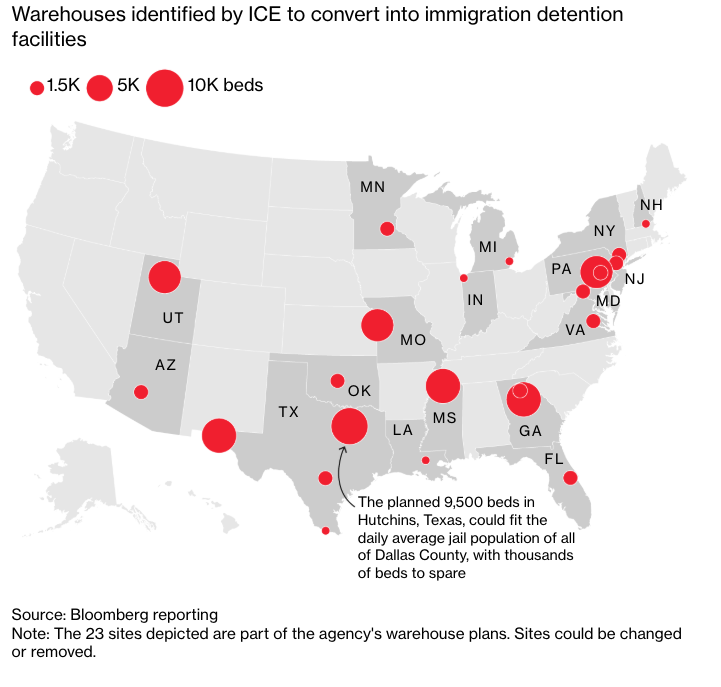
U.S Immigration & Customs Enforcement (ICE) is spending hundreds of millions of dollars to acquire as many as 23 large industrial warehouses and convert them into high‑capacity detention and processing The cost for just two of these properties was $172 million.
These facilities—often hundreds of thousands of square feet—are rapidly retrofitted for mass intake and short‑term holding, a process dominated by private contractors who can deliver specialized build‑outs at scale. One of them, in El Paso, Texas, could be among the largest jails of any kind in the country.
Federal agencies are exempt from local zoning and land‑use regulations. This allows ICE to convert industrial properties into detention centers without municipal approvals, enabling unusually fast deal execution and making older or underutilized warehouses far more liquid than in typical private‑market transactions. This bypassing of local entitlement processes means landlords can secure long‑term, government‑backed leases with minimal friction.
Civil‑rights groups warn about the implications of industrial‑scale detention, but for investors, the trend signals a countercyclical, policy‑driven demand driver—especially in logistics‑heavy, lower‑rent industrial submarkets where large footprints, freeway access, and political insulation align with ICE’s operational approach.